

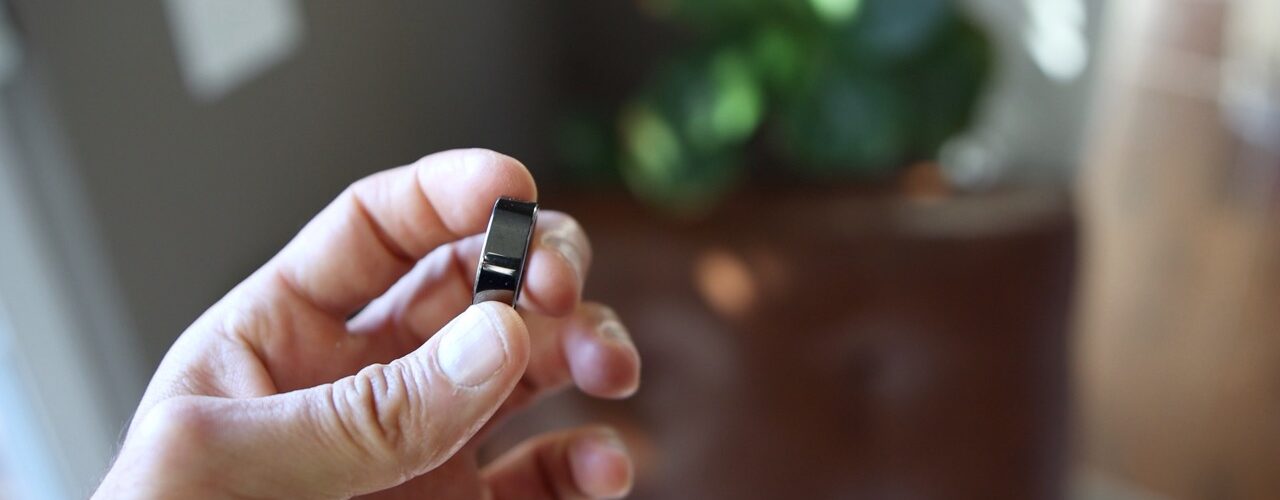
I’ve been wearing the Ultrahuman Ring Pro every day for about a month, right alongside my Oura Ring. This is Ultrahuman’s comeback ring in the US. It’s bigger than the Ring Air, it comes with a charging case, and it promises up to 15 days of battery life. After a month of sleep, rides, runs and walks, I found it does some things really well, and some things not so well.
The quick verdict
If you want a smart ring that goes close to two weeks between charges, gives you a ton of sleep and recovery data, and doesn’t require a subscription for the core features, the Ring Pro is a strong option. Just know it’s a sleep and recovery tracker first. If you care about workout tracking, keep using your watch, chest strap or bike computer.
What I like
- Around 12 days of battery in Turbo Mode
- The charging case, which is my favorite part of the package
- No subscription needed for the core features
- A huge amount of sleep and recovery data
- Connects to Wahoo, Zwift, TrainingPeaks, Coros, Apple Health and Google Health
- No scratches yet after a month of wearing it 24/7
What I don’t
- Thicker and heavier than the Ring Air
- Activity tracking struggles, especially indoors
- Paid add-ons can add up if you want everything
- No Garmin connection
Watch the full review
Price and specs
The Ring Pro is $479, and that includes the charging case. There’s no monthly subscription for the core features. Mine is a size 9 in Aster Black, and it also comes in Bionic Gold, Space Silver and Raw Titanium.
| Ring Air | Ring Pro | |
|---|---|---|
| Thickness | 2.4 mm | 2.65 mm |
| Weight | From 2.4 g | 3.3–4.8 g, depending on size |
| Claimed battery | Up to 6 days | Up to 15 days (45 days with the case) |
| Charging case included | No | Yes |
Design: bigger, on purpose
When Ultrahuman launched the Ring Air, the big selling point was being one of the thinnest and lightest smart rings around. The trade-off was only four to six days of battery. With the Ring Pro, Ultrahuman went the other way. It’s a bit thicker and heavier, and in return you get a lot more battery.
So does the extra size matter? Not much for me. I wear it on my ring finger and barely notice it during the day, on the bike or on runs. Most smart ring makers recommend the index finger for the best readings, and that’s where I usually wear my Oura. Even though the Oura is thinner, it gets in the way more there, especially when I’m using a knife in the kitchen or working with tools. On the ring finger, the thicker Ultrahuman just doesn’t bother me. The one time I take it off is weight training, where it would get scratched or be in the way, and Ultrahuman recommends that anyway.
The ring can also be cut off more easily if your finger swells or gets injured. Ultrahuman calls it ProRelease, but honestly, that’s a feature that needs a sentence, not a “Pro” label. Plenty of other rings can be cut off in an emergency too.
Durability has been good so far. I’ve been wearing it pretty much 24/7, and the glossy Aster Black finish doesn’t have a single scratch yet. It’ll be interesting to see how it holds up over time.
The charging case is the star
The charging case is my favorite part of this whole package. You drop the ring in and it snaps into place magnetically, no fiddling to line it up, and that little snap is really satisfying every time. The case has its own battery, and Ultrahuman says it stretches total battery life to as much as 45 days, so you could travel for weeks without packing a cable. There’s an LED that shows how much charge the case has left, and you can charge the case on any standard wireless charging pad, like the one you use for your phone.
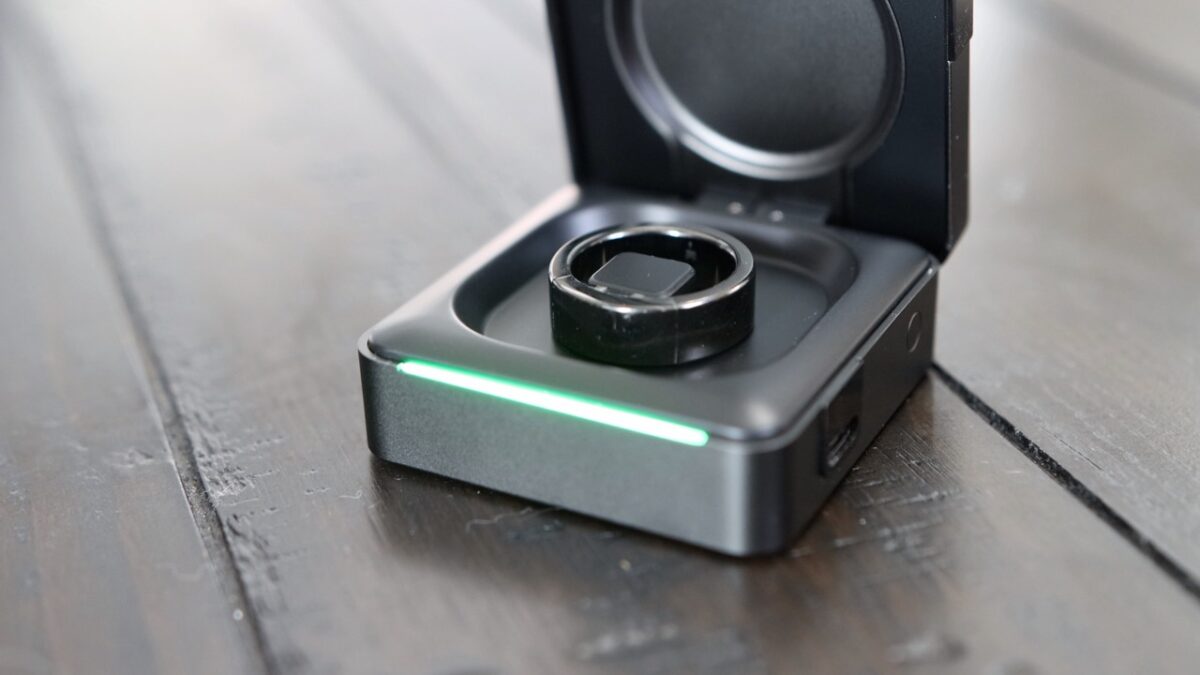
If you misplace it, the app has you covered. You can turn on location tracking for both the ring and the case, and Find My Charger works a lot like Find My on an iPhone. You can even play a sound from the case to track it down. Pretty cool! One thing I’d like to see is the case’s light blinking while you’re looking for it. Right now it only plays a sound, and a flashing light would make it easier to spot in a dark room or a cluttered bag.
Battery life: it lives up to the claim
Ultrahuman claims up to 15 days in Chill Mode and around 12 days in Turbo Mode. I’ve only used Turbo Mode, and mine lasts around 12 days, so it’s living up to the claim.
So what’s the difference between the two modes? I asked Ultrahuman, and it comes down to how often the ring checks your heart rate:
| Overnight | During the day | |
|---|---|---|
| Turbo Mode | About every 6 minutes | About every 6 minutes |
| Chill Mode | About every 6 minutes | About once an hour |
That means your sleep and recovery data are the same in either mode. What you give up in Chill Mode is detail on your daytime heart rate and stress. So if sleep and recovery are what you care about most, Chill Mode gets you even more time between charges. If you want the fuller picture through the day, stick with Turbo.
The app, Jade and what costs extra
The Ultrahuman app gives you a lot of data. Beyond the usual sleep stages, heart rate, HRV and temperature, you get things like sleep cycles, morning alertness and even a Brain Waste Clearance score. If you love digging into numbers, there’s plenty here.
There’s also Jade, Ultrahuman’s AI assistant, similar to ChatGPT. I found it handy for a quick summary of my sleep or readiness, but beyond that I didn’t use it much.
One thing to know: the core features are free, but the free version of Jade limits how many questions you can ask each day, and some add-on features, which Ultrahuman calls PowerPlugs, cost extra. You can buy them individually, or get Ultrahuman Max for $9.99 a month or $99.99 a year. That bundles every premium PowerPlug, Jade Pro, ring protection, and discounts on blood testing and CGM. For comparison, Oura’s membership is $5.99 a month, so Max isn’t cheap, but it’s optional.
Sleep and recovery: how it compares to Oura
To check accuracy, I wore the Ultrahuman and my Oura on the same nights. Neither one is a medical device, so this isn’t about crowning a winner. Here’s what three nights looked like:
| Night 1 | Night 2 | Night 3 | |
|---|---|---|---|
| Resting/lowest HR (Ultrahuman / Oura) | 51 / 47 bpm | 51 / 47 bpm | 49 / 46 bpm |
| HRV (Ultrahuman / Oura) | 47 / 35 ms | 40 / 32 ms | 39 / 29 ms |
| Total sleep (Ultrahuman / Oura) | – | 7h 11m / 6h 44m | 7h 47m / 7h 09m |
Every night, the Ultrahuman’s heart rate came in three to four beats higher than Oura’s. Ultrahuman told me the ring takes the lowest reading from the stretch of the night when your heart rate stayed lowest, which filters out brief dips. So I guess it makes sense that it lands a little higher.
HRV was also about 10 ms higher, but both rings moved in the same direction night to night, so the trends matched. That’s really what matters.
For sleep, the Ultrahuman is more generous. It tends to credit me with more sleep, less time awake and a lot more REM, while deep sleep was almost identical. Oura was also better at catching when I woke up. One morning I woke around 4 a.m. and got out of bed at 4:20. Oura nailed it, while the Ultrahuman ended my night at 4:26.
So it works well for tracking your own trends. Just don’t compare its numbers directly with another device.
Activity tracking: its weak spot
Activity tracking is where the Ultrahuman struggles the most, and it’s the part I’d want any cyclist or triathlete to know about. I compared it against my Apple Watch and Oura on a few workouts:
| Workout | Ultrahuman | Apple Watch | Oura |
|---|---|---|---|
| Outdoor ride | Detected as cycling, 2:00:00, avg HR 91, max ~110 | 2:23:08, avg HR 106, max 133 | Detected |
| 95-min indoor ride | Not detected | – | About 90 minutes |
| 1-hour treadmill run | 30 min of generic “activity,” 7,999 steps | 78 exercise min, 11,298 steps | About 1 hour, 11,353 steps |
| 11-min walk | Missed | – | Detected |
When it does catch a workout, it tends to log it shorter than it really was, and the heart rate reads lower. It counted about 30% fewer steps than both my Oura and Apple Watch on that run. Indoors, it either misses the workout completely or just calls it “activity.”
It also doesn’t send a notification to record a walk like my Apple Watch does. It only asks when you happen to open the app, and then it starts tracking from that moment instead of going back to when you started. On one walk, that meant losing the first 15 minutes. Oura, on the other hand, tends to pick up my walks on its own.
Part of this likely comes down to that six-minute heart rate sampling, which just isn’t enough to capture a workout. Smart rings aren’t really designed for continuous workout tracking like a dedicated sport watch.
So who is it for?
If you want a smart ring that goes almost two weeks between charges, gives you plenty of sleep and recovery data, and doesn’t require a subscription for the core features, the Ultrahuman Ring Pro is a strong option, and the charging case is a great bonus. I also like that it connects to a long list of third-party apps, like Wahoo, Zwift, TrainingPeaks, Coros, and Apple and Google Health. Interestingly, Garmin isn’t one of them.
Just keep in mind that it’s a sleep and recovery tracker first. If workout tracking matters to you, keep using your watch or bike computer.
Get the Ultrahuman Ring Pro: Ultrahuman Ring Pro
Some of the links in this post are affiliate links. If you buy through them, I may earn a small commission at no extra cost to you. It helps support the site and the channel.
FAQ
Does the Ultrahuman Ring Pro need a subscription?
No. The core features are free. Some extras, like Jade Pro and premium PowerPlugs, cost more, either individually or through Ultrahuman Max at $9.99 a month or $99.99 a year.
How long does the battery last?
Ultrahuman claims up to 15 days in Chill Mode and around 12 in Turbo Mode. I got about 12 days in Turbo Mode. The charging case extends it to as much as 45 days total.
Is it accurate compared to Oura?
The trends matched Oura well, but the numbers don’t line up exactly. In my testing, its resting heart rate read three to four beats higher and its HRV about 10 ms higher. It also credited me with more sleep and REM.
Can it replace my watch for training?
Not really. It struggled to detect workouts, especially indoor rides and runs, and it undercounted time, heart rate and steps. Keep your watch, chest strap or bike computer for training.
Does it work with Garmin?
No, not at the time of writing. It does connect to Wahoo, Zwift, TrainingPeaks, Coros, Apple Health and Google Health.